If you’ve ever stood in the toothpaste aisle wondering whether to grab a whitening kit or call your dentist, you’re not alone. Many Lenexa residents ask this exact question. The debate around professional teeth whitening vs. store kits and why one actually works comes down to science, safety, and realistic expectations. This guide gives you an honest breakdown so you can make the right choice for your smile.
What Store-Bought Whitening Kits Actually Do
Store kits — strips, trays, and pens — use a low concentration of hydrogen peroxide or carbamide peroxide. This is intentional. Consumer safety regulations limit the strength of whitening agents sold without a prescription. As a result, the bleaching action is mild and slow.
Most kits brighten teeth by one or two shades at most. They work best on mild surface stains from coffee or tea. Deeper discoloration caused by aging, antibiotics, or trauma rarely responds well to these products. Many users feel frustrated when results fall short of the packaging’s promises.
There’s also the fit problem. Generic trays don’t conform to your unique bite. Gel leaks onto your gums and can cause irritation or sensitivity. Without professional supervision, it’s easy to overuse these kits and damage enamel over time.
How Professional Whitening in Lenexa Works Differently
Professional whitening uses prescription-strength peroxide — often three to eight times stronger than store products. Dr. Caresa Doakes applies this under controlled conditions at Lenexa Smiles and Braces. The result is dramatically faster and more even whitening across all visible teeth.
Custom trays are a key advantage. Your dentist takes precise impressions of your teeth. The trays fit snugly, keeping gel exactly where it belongs. This reduces gum exposure and increases effectiveness at the same time.
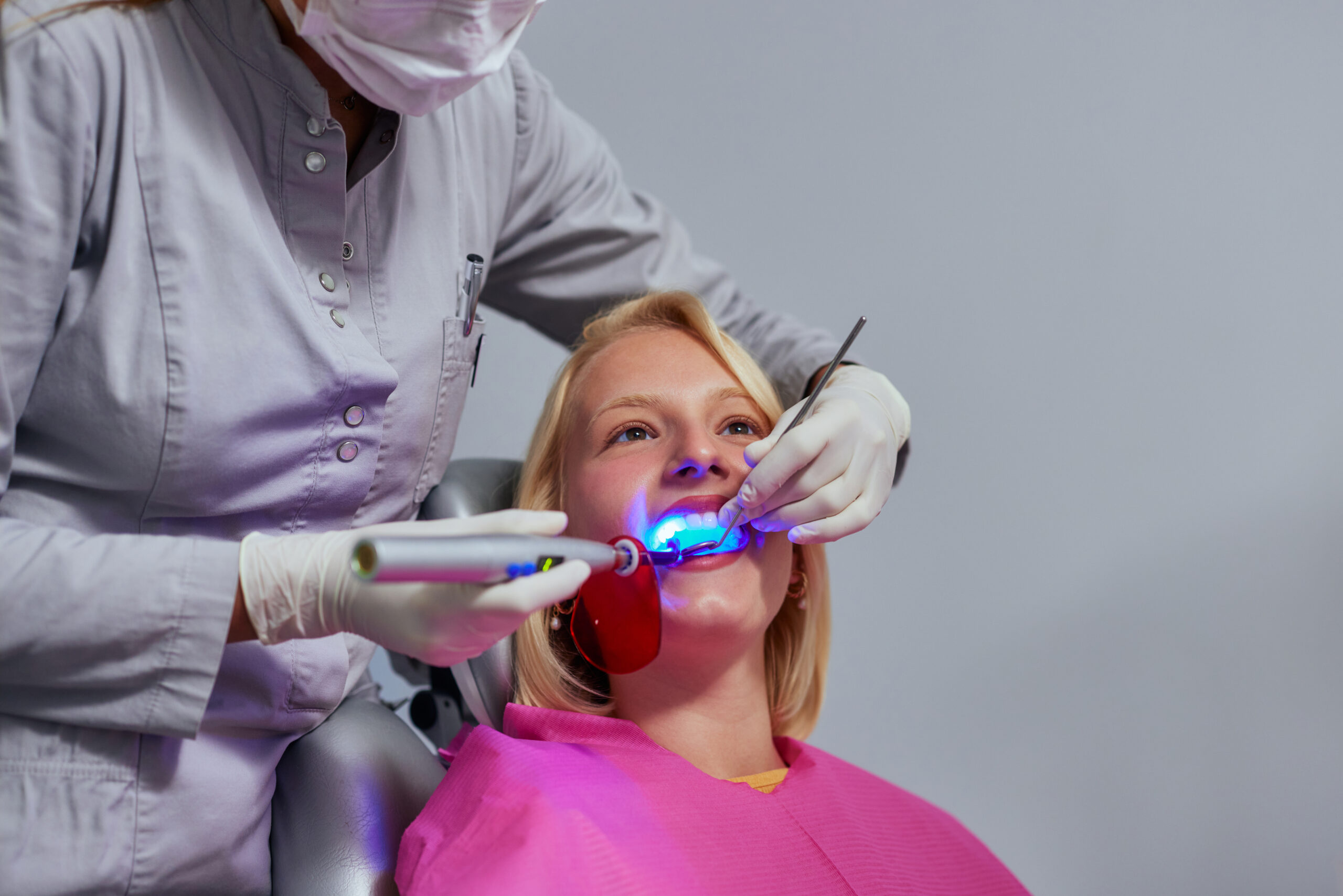
In-office treatments often include light or laser activation. This accelerates the chemical reaction for results you can see in a single appointment. Take-home professional kits are also available for patients who prefer a gradual approach — but with stronger gel and better-fitting trays than anything sold in stores.
- Prescription-strength whitening gel for faster results
- Custom-fitted trays that protect gum tissue
- Professional monitoring to prevent sensitivity and overuse
- Option for in-office or supervised take-home treatment
- Results that typically last one to three years with proper care
Why Results Differ: The Science Behind the Shade
Tooth color comes from both surface stains and intrinsic discoloration deep within the enamel and dentin. Surface stains respond to almost any whitening method. Intrinsic stains require higher peroxide concentrations and longer contact time to break down chromogens effectively.
Store kits simply don’t have the strength to reach intrinsic discoloration. They polish the surface and lift light staining, but they stop there. Professional whitening penetrates deeper into the tooth structure. This is why the shade change is so much more noticeable after a dental visit.
Sensitivity is another important difference. Many people abandon store kits because of tooth pain. Professional treatments include desensitizing agents applied before or after whitening. Dr. Doakes also reviews your dental history first. If you have thin enamel, exposed roots, or existing restorations, she adjusts the approach accordingly.
- Surface stains: both methods can help, but professional works faster
- Intrinsic stains: only professional-strength gel reaches these
- Sensitivity management: professional treatment includes protective steps
- Existing dental work: crowns and veneers don’t respond to bleach — only a dentist can advise on this
Who Should Choose Each Option?
Store kits suit a very specific type of patient. If your teeth are already mostly white and you want minor maintenance between professional treatments, a low-strength strip can work. They are also fine for occasional top-ups if you’ve already had professional whitening. Expect modest results and be consistent with usage.
Professional whitening suits anyone seeking a meaningful change in tooth color. It’s the right choice for upcoming events like weddings or job interviews. It’s also the better option if you’ve tried store kits without success. Patients with sensitive teeth, dental restorations, or significant discoloration should always see a dentist first.
It’s also worth noting that whitening is not suitable for everyone. Active cavities, gum disease, or certain types of staining need to be addressed before any bleaching begins. A professional consultation ensures you whiten safely and achieve the shade you’re actually aiming for.
Combining Whitening with Your Overall Dental Care in Lenexa
Teeth whitening works best as part of a broader dental health routine. Healthy gums and cavity-free teeth respond better to whitening treatment. That’s why Dr. Doakes recommends a checkup before starting any whitening program — professional or otherwise.
If you need other cosmetic work like dental bonding or crowns, timing matters. Whitening should typically be done before placing tooth-colored restorations. This ensures your new restorations are matched to your brightened shade. Your dentist will coordinate the sequence to give you the most natural-looking result.
Regular cleanings also extend your whitening results. Plaque and tartar buildup dulls your smile faster than most people realize. Combining whitening with good hygiene habits — and professional cleanings every six months — keeps your results looking fresh longer.
Our team at Lenexa Smiles and Braces is here for all stages of your dental care. Whether you need a routine cleaning, a cosmetic consultation, or urgent care from our Emergency Dentistry Lenexa services, we’ve got you covered. We also offer preventive services like Dental Sealants Lenexa to protect your teeth long-term.
Making the Right Choice for Your Smile
The honest answer to the professional teeth whitening vs. store kits debate is this: both have a place, but they don’t deliver the same results. Store kits are accessible and inexpensive, but their limitations are real. Professional whitening is a clinical procedure backed by stronger chemistry and expert oversight.
If you’re serious about improving your smile, a consultation at Lenexa Smiles and Braces is the smartest first step. Dr. Caresa Doakes will assess your tooth color, check your dental health, and recommend the right whitening approach for you. No guesswork, no wasted money on kits that won’t work for your specific situation.
You deserve a smile you’re confident about. Book Now to schedule your appointment with our team.
Frequently Asked Questions
How long does professional teeth whitening last?
Professional whitening results typically last one to three years. This depends on your diet, oral hygiene habits, and whether you smoke. Avoiding staining foods and drinks like coffee and red wine helps extend your results significantly.
Is professional whitening safe for sensitive teeth?
Yes, in most cases. Dr. Doakes evaluates your sensitivity level before treatment. Desensitizing gels and custom tray design help minimize discomfort. Some patients experience mild temporary sensitivity, but this usually resolves within 24 to 48 hours.
Can whitening damage my enamel?
When used correctly under professional supervision, whitening does not damage enamel. Overusing store kits without guidance is a greater risk. Professional treatments are calibrated to be effective without compromising tooth structure.
Will whitening work on crowns or veneers?
No. Bleaching agents do not change the color of dental restorations like crowns, veneers, or bonding. Only natural tooth enamel responds to whitening gel. If you have visible restorations, Dr. Doakes will discuss the best cosmetic approach for an even result.
How many shades whiter can I expect with professional treatment?
Most patients achieve four to eight shades of improvement with in-office professional whitening. The exact outcome depends on your starting shade and the type of discoloration you have. Your dentist can give you a realistic expectation during your consultation.